
The art of decarbonizing Europe
Fluxys c-grid and OGE developing an essential CO2 route in Northern Europe with many storage options.


Ruhbens pipeline
CO₂ pipeline linking to Ruhbens
Ruhbens future developement
Industrial hubs
Permanent CO₂ storage
Interconnected point

About the project
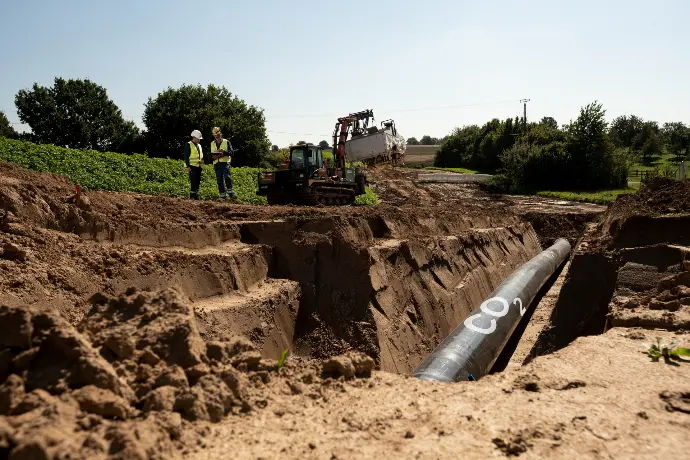
Ruhbens, a central CO2 artery for industry and the climate
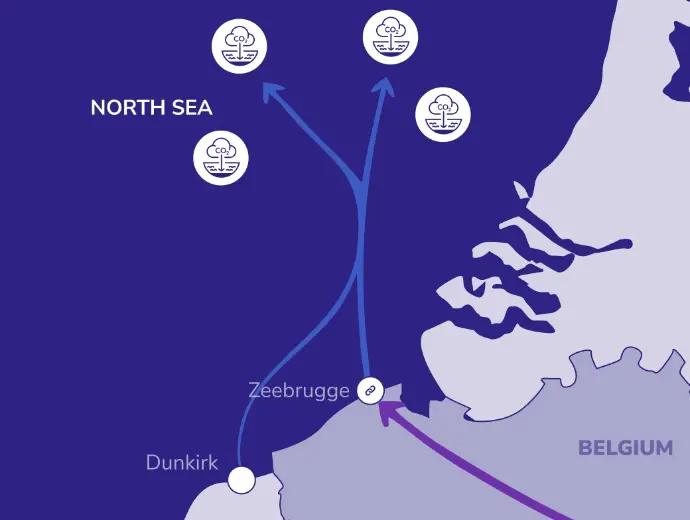
Ruhbens - for Ruhr, Belgium, North Sea - will connect the Ruhr region in Germany and beyond to the port of Zeebrugge, transporting CO2 to permanent offshore storage sites in the North Sea. More than just a network, Ruhbens is a strategic and central artery that supports the energy transition and helps German and Belgian industries on their path toward climate neutrality. The project's name is no coincidence: the artist (and diplomat) Rubens was born in Siegen, in North Rhine-Westphalia, before settling in Antwerp and travelling throughout Europe.
Unique access to diversified storage capacities
Ruhbens offers unmatched flexibility through to its multi-site approach, a major asset for providing storage volumes tailored to the growing needs of industry.
Ruhbens will provide access to several geological storage sites in the North Sea via CO2 Highway Europe or CarbonConnect, ensuring security and scalable capacity for industrial decarbonisation, as well as European interoperability in connection with other Projects of Common Interest (PCI) and cross-border corridors.
An industrial and climate challenge
In the face of the immense challenge of the energy transition, carbon capture, utilisation and storage (CCUS) stands as a cornerstone of Europe's decarbonisation strategy.
CO2 industrial emissions remain a major contributor to the overall CO2 output both in Belgium (~30 million tonnes annually - source: Eurostat) and in Germany (~150 million tonnes annually - source: Eurostat). In Germany, around 40 % of industrial emissions originate in North Rhine‑Westphalia (NRW) (Source: CMS NRW). For industries such as steel, lime and cement, decarbonisation through electrification or green and low-carbon molecules alone is either extremely challenging or simply not feasible.
Key Numbers
up to 20 Million Tonnes
CO2 transport capacity per year
500 km
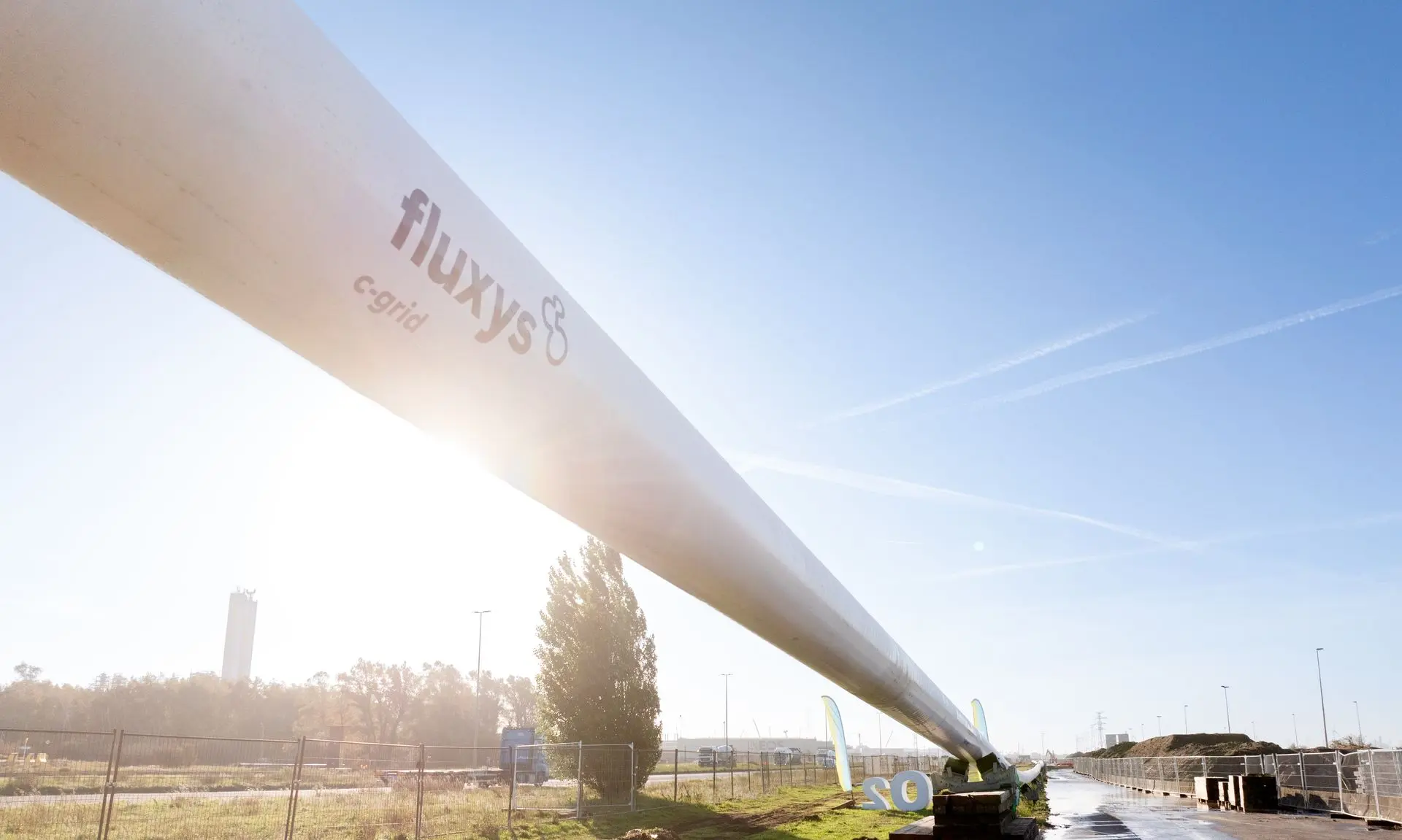
CO2 pipelines in Germany and Belgium
Early 2030's
Operation possible depending on market demand
And this is only the beginning: the network can be extended to neighbouring industrial hubs as the CO2 market develops.
Some news

The Partners

Founded in 2023, Fluxys c-grid is a subsidiary of Fluxys Belgium, which holds a 77.5% majority stake. Pipelink and Socofe each hold 10%, while SFPIM owns 2.5%. Fluxys c-grid was created to develop and operate Belgium's CO₂ transport infrastructure, supporting industry in its transition toward a low-carbon economy. The company was appointed CO₂ Network Operator in Wallonia in July 2025 and in Flanders in October 2025.
 www.fluxys.be
 info@fluxys-c-grid.com


OGE gets gaseous molecules flowing. We create and maintain a modern, safe and efficient infrastructure for natural gas, hydrogen and CO₂. Our pipeline network with a length of more than 12,000 kilometres is fundamental to Germany’s energy supply and ensures the prosperity of our society. As the market-leading gas transmission system operator, we are a pioneer, driver and enabler of the energy transition and climate neutrality. We see ourselves as transformation consultants and service providers for industry, power plants, distribution system operators and our partners from production and politics. The OGE Group is also a future-proof, modern workplace for more than 2,000 people. In the interests of our employees and shareholders, we continually adapt our business model to ensure lastingly profitable development.